Finding Yourself in Creating for Yourself
2026-02-28 10:55
(My perspective here is going to come from making my own clothing, mainly regarding knitting, but I also think the perspective can apply to any creative endeavour, like making your own furniture.)
Before I got really into making my own clothes, I would frequently buy an article of clothing and never wear it. I’d look at it and think “I should wear this more", refuse to de-clutter it, and then it would continue to sit in my closet unworn. It would make me feel guilty, annoyed at the wasted money, and frustrated with myself for making poor decisions. Sometimes I would try on the cursed article of clothing before deciding to wear something else without understanding why.
In March 2023, I knit my first sweater (the step by step sweater by Florence Miller), taking on short-rows and italian bind-offs as a beginner who had only knit a baby blanket during the pandemic three years prior. It took me an entire month, which at the time was an insane length of time to dedicate to one project, to one sweater. Nowadays, despite my knitting speed and skill increasing, sweaters take me even longer as I take on more and more challenging projects.
I was living in an instant gratification world, where I could buy a sweater for 5$ on a whim, hate it, and discard it. I never invested energy in my spare time to doing anything that took more than a couple hours (other than Runescape, of course). I could bake bread, or make my own cheese, or draw a picture, but those were done quick and I would never keep up anything consistently.
I had always been creative as a kid, and I liked art, but I was disconnected from myself and any motivation. Why make my own sweater when the materials, let alone the time, cost more than buying one? I was also incredibly burnt out from being so focused on school (I had graduated with honours) and then my first full-time job (I had been promoted the year prior). Layoffs were happening all across the tech industry in early 2023 (luckily I didn’t lose my job) but it had killed any hope or motivation about my job I had left. What was the point when we were so dispensable? When none of the higher-ups cared what we were doing? I used to think what I was doing had value, but every time I implemented a new feature we saw little usage. (Unsurprisingly, the rise of AI in the following years has only made all of this hope/motivation strip away to more and more nothing).
As a kid I tried to learn to knit, got frustrated my stockinette was curling because I thought my tension was too tight (spoiler: Stockinette always curls). As a kid I tried to learn to sew, but the sewing machine my dad had was a nightmare and never worked and again I blamed myself (spoiler: The machine probably needed servicing, an oiling, and a new needle). Now as a depressed adult I had one advantage over child me, and it was disposable income. I could afford better materials (a good sewing machine, better knitting supplies, patterns, and easier to use yarn and fabric) and the internet had millions more easily accessible tutorials and examples of other people making beautiful things with just some time and effort.
So I took on the challenge of knitting my own sweater, and the world opened up to me.
Slowing Down
You’re standing in a department store (or browsing online), surrounded by more clothes at once than ever before in human history. The fluorescent lights are too bright and buzz just on the edge of your range of hearing. People pass by constantly. You’re too hot in your jacket but also still cold from your walk from your car to the mall. Every shirt comes in six different colours.
You barely even have the mental energy to consider which colour is your favourite, which colour you like to wear or would go well in your closet or society thinks you should wear or your mom won’t complain about. You don’t even have the time to check every piece of clothing for the materials & care tag, or even to see if the seams are already fraying. You can’t even filter by material online.
Do you really have the time, in that moment, to ask yourself “how long do I like my sleeves?”
And even if you spent 12 hours in that store considering your options, does it matter? If you’d rather longer sleeves, the t-shirts are standard sized. Everything is made to fit the most average person, who is a person that doesn’t actually exist. (This is even harder if you don’t fall in typical straight size ranges.) Maybe you prefer a more breathable material, but after checking your 20th shirt and seeing it’s still made of 100% polyester, you lose the motivation to check the next one. Even the eco-branded cotton t-shirt was probably processed with harmful chemicals that the company is not required to disclose to you.
You have no control, so why care? Buy the 5$ t-shirt, never wear it, and discard it in 3 years. I don’t blame you.
When it takes you a month or more to make a sweater, that’s when you get to slow down and focus. Your first step is to pick either a yarn or pattern. As a beginner, it’s probably best to focus on the pattern so you know how much yarn to buy. Nowadays I usually start at the yarn, since I have a good estimate of how much yarn I need, or I can check a couple patterns I’ve been thinking about.
When you’re looking for a pattern, you’re focused entirely on the construction technique and the fit. You start off slow: How much ease do you want? Do you want it to be fitted, or baggy? Do you want the shoulders to be shaped, or off the shoulder? What kind of technical feature do you want (cables, colourwork)? You can start off simple with only stockinette and branch out as you get experience. The pattern suits you because you choose it.
The pattern probably comes with multiple photos of an actual person (not a model with a white background) wearing the clothes, and ravelry usually comes with at least a dozen other people’s projects to compare what it looks like on different people in different yarns. Clothing in a store is flat on a table, and clothing online is usually on a model posed to perfection.
Then you get to pick out your yarn, and your focus is entirely on material and colour (and the price). You can take your time touching the yarn, considering your options. Of course it’s the nicest to do this in person, but there are a lot of online yarn substitution guides to help you find something that suits you. A wool that isn’t too itchy for you, a yarn with a drape you specifically want, and so on. If you spin your own yarn, you get to start even earlier in the process. The yarn suits you because you choose it.
You knit a gauge swatch; it might match or it might not. You need to decide how are you going to handle it: Redo the swatch? Change patterns to one that matches? Redo the math of the pattern? (My preferred option, but not for everyone).
Then you actually get to start to knit your sweater. At every step in the process, you decide how you continue. Patterns often come with optional construction techniques, and a lot of room for your own opinion in fittings as you go. Are the armpit seams too high? Knit a couple more rows. Finally you get to the line of the pattern that says “Knit until sleeve measures 42cm, or desired length”, and the only person who’s opinion matters is you.
The decision is yours. You’re working for yourself. The sweater now fits you, and only you.
The Process of Trial and Error Involves Error
“I am once again shocked that the process of trial and error involves error”
- every creative ever
Just kidding, the sweater doesn’t actually fit you. You are going to make mistakes. Maybe your gauge swatch wasn’t accurate, or the pattern didn’t work for you. There is no pattern that will fit every single person. Maybe you didn’t even like the pattern, you just wanted to look like the person in the photo. You might hate your yarn choice and find it too itchy. You might regret making the sleeves longer because they keep getting in the way.
It’s frustrating, it’s upsetting, it’s disappointing. But you will learn so much in failure.
That first sweater I made in 2023? I knit it in acrylic and only wore it twice because it is the exact opposite of breathable and wearing it was a nightmare for me. I immediately knit my second sweater in merino using the same pattern. It’s not perfect (the bindoffs are pretty sloppy) but I love wearing it.
The best part of knitting (why I prefer it over sewing even if I still sew) is that practically every mistake that is fixable. Did you do a purl 10 rows ago when you meant to do a knit? Just ladder down, less than 5 minutes to fix. Did you mess up a cable? More effort, but entirely possible to fix (maybe with some help from your local knitting community). Did you spend three months on a sweater where the yarn cost 200$ and it didn’t fit like you wanted? Just unravel it and start again. Failure is unfortunately key in the process of trial and error.
With mistakes I have had to enforce a limit for myself; I’m such a perfectionist even the smallest mistake will bother me. These days I force myself only to fix mistakes if they are functional mistakes that make the piece unwearable. A small ugly bit in the armpit? I have to learn to let it go.
An Aside on “Fit”
I feel compelled to add a section here that emphasizes every time I use the word “fit” it entirely depends on your opinion and preference. There is no person, no colour analyst or Kibbe body type expert, that can tell you what fits you. The way I use the word fit is entirely based on your tactile and physical response to wearing a piece of clothing, not what it looks like in the mirror. I am not talking about something that is “flattering” or makes you look skinny.
If you like a certain fit because it makes you feel sexy, that is entirely up to you. Do you like the feeling of wearing tight clothing? Do you like how revealing clothing makes you feel? Or do you prefer loose clothing? Do you not mind polyester fabric? Or do you prefer cotton? Are you a cold or hot person? How sensitive are you to itch? Will you wear an article of clothing if it requires a specific type of underwear? There are a million questions that boil down to ‘what do you like on your body’?
I was unable to answer these questions for myself because I didn’t know how to ask them. I didn’t realize it was a priority. I was instead focused on how the clothes looked on me in the change room. I liked that tube top I tried on because it looked cute but I never wore it because I didn’t want to put on a strapless bra. I have very slopey shoulders and I hate the feeling of a strap slipping, so I love raglans & racerbacks. But I would never make one for my broad-shouldered partner.
My clothing suits entirely my preferences. I’ve never felt so comfortable in my own body in my entire life, because my clothing is no longer overstimulating. I come home and I don’t immediately despair to change into pyjamas.
Now
I still feel disillusioned at work; AI continues to enshittify everything and things suck… everywhere, but I’m part of a community now too. I go to weekly knitting & spinning socials and these make me feel like I belong. I didn’t even discuss the benefits of a tedious, hand occupying task for your mental health, but knitting in meetings is required for me now. I’m getting into spinning and finding that even more soothing due to the repetitive motions, and then I get to enjoy my yarn for even longer when I knit it.
I’ve knit 5 sweaters, tons of hats, toys, gifts, and more since that first sweater in 2023 (no scarves though, fuck scarves). I’ve also altered clothing & mended sweaters I already owned and loved, some that belonged to my mom. I feel like I have so much control over my own wardrobe.
Finishing my 3D-printed sock machine last year was awesome too. I used to absolutely hate wearing socks and I found knitting them unexciting. I’m the weird in-between where socks labelled F are too small and socks labelled M are too big, but also I have poor circulation and my feet are always cold. Now I have warm wool socks that bring me constant joy. I keep going to sleep with them on without noticing, but two years ago I would’ve gagged at even the thought of sleeping with socks on.
Since I learned to make socks in 2 hours on the sock machine, I’ve been offering custom socks to all my friends and family. I hit a weird road-block: When I asked people for their shoe size or for a precise foot measurement, they would shrug me off and ask for a “generic size”. It made me want to bash my head against a wall, my brother in christ the whole point is that I can make socks for you. There is no regular size because I am not a standardized, corporate machine and your commerical socks probably also do not fit. I can tell a difference between even 0.5cm (a few rows) on my socks, especially since the wool is thicker and slightly less stretchy than extremely thin cotton socks that will get holes immediately.
Reflecting on this difference between my experience and the experience of non-crafty people in my life is what inspired me to write this blog, because this does matter so much to me. Now I understand what I do and don’t like, and I know the absolute pleasure of socks and clothes that fit me according to only my opinion. I can’t make all my clothes, my full-time job and hip injury make it so I have to pace myself (especially with sewing), but at least now I am more prepared and less overwhelmed.
Appendx: some pictures!
My first sweater (acrylic) (pattern: step by step sweater by florence miller)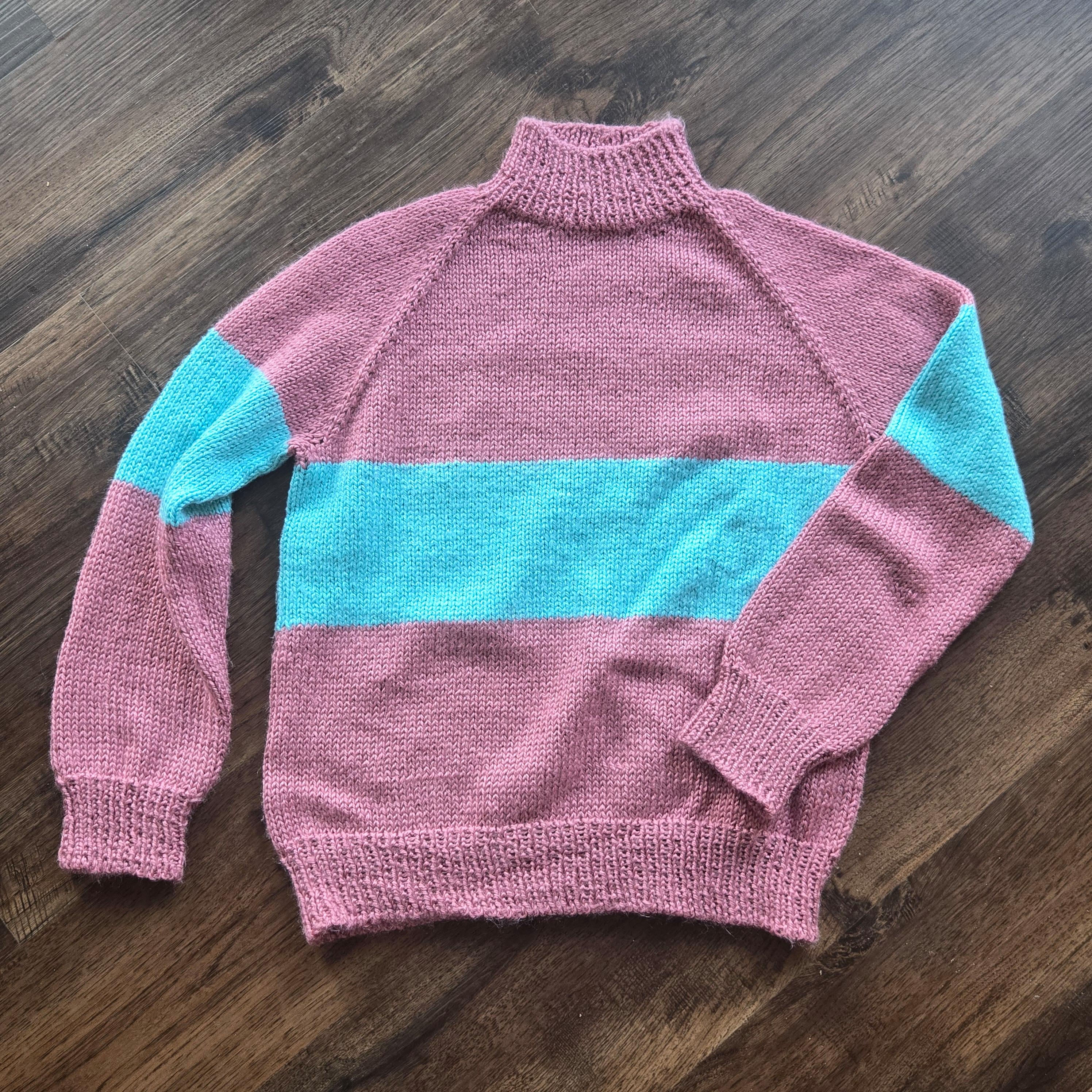
My second sweater (merino) (pattern: step by step sweater by florence miller)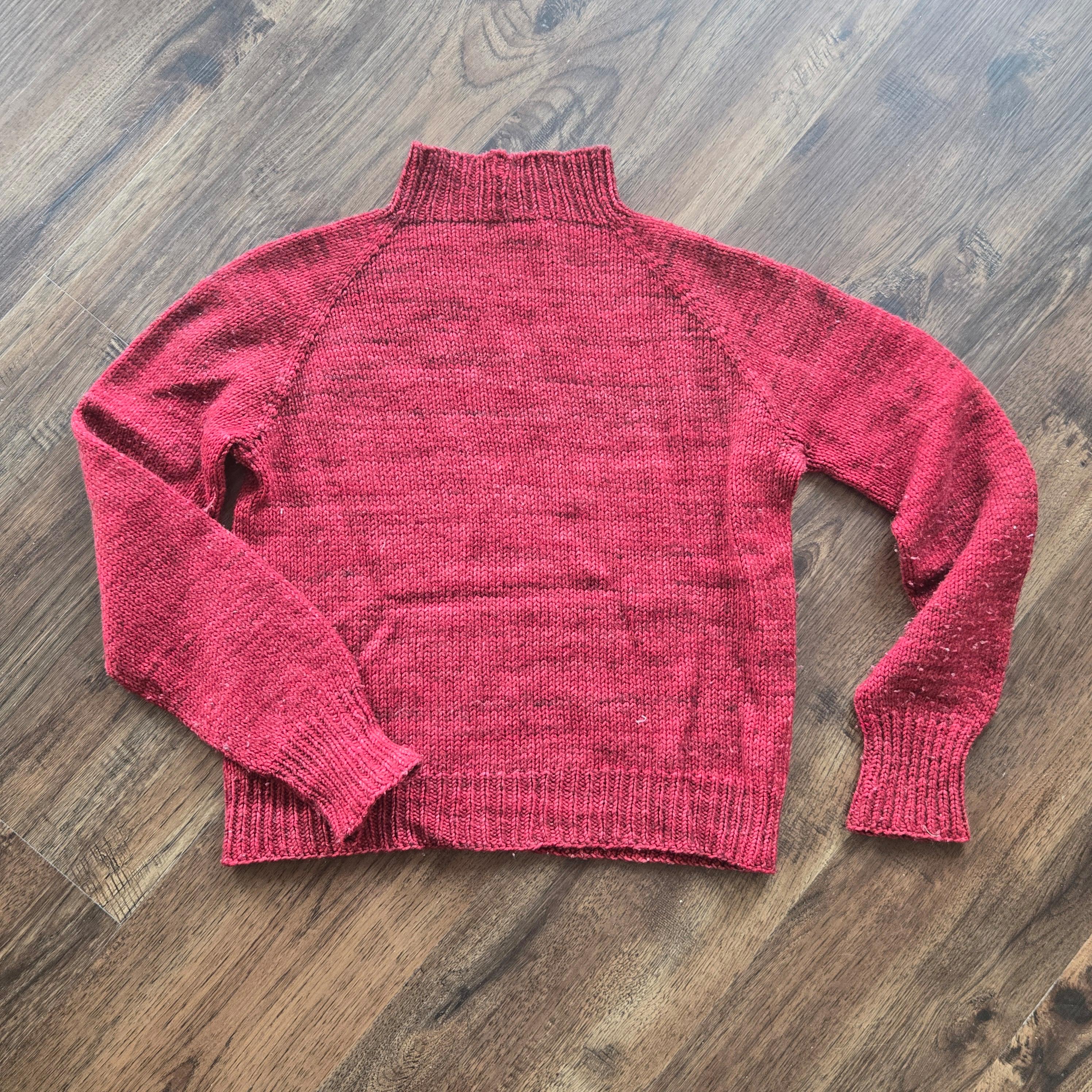
A collage of all the socks I’ve made: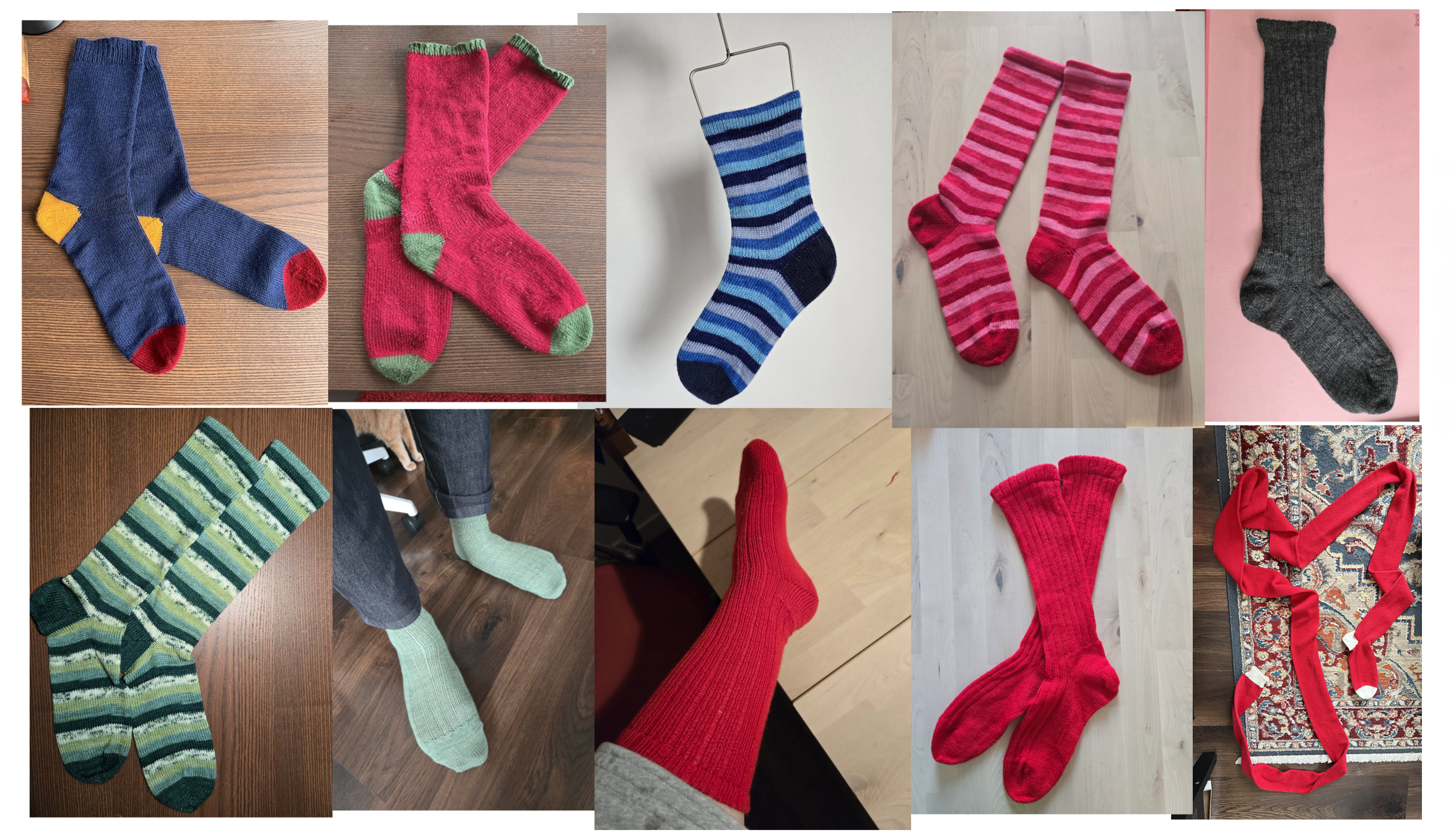
And here’s my sock machine with my beloved lomg sock.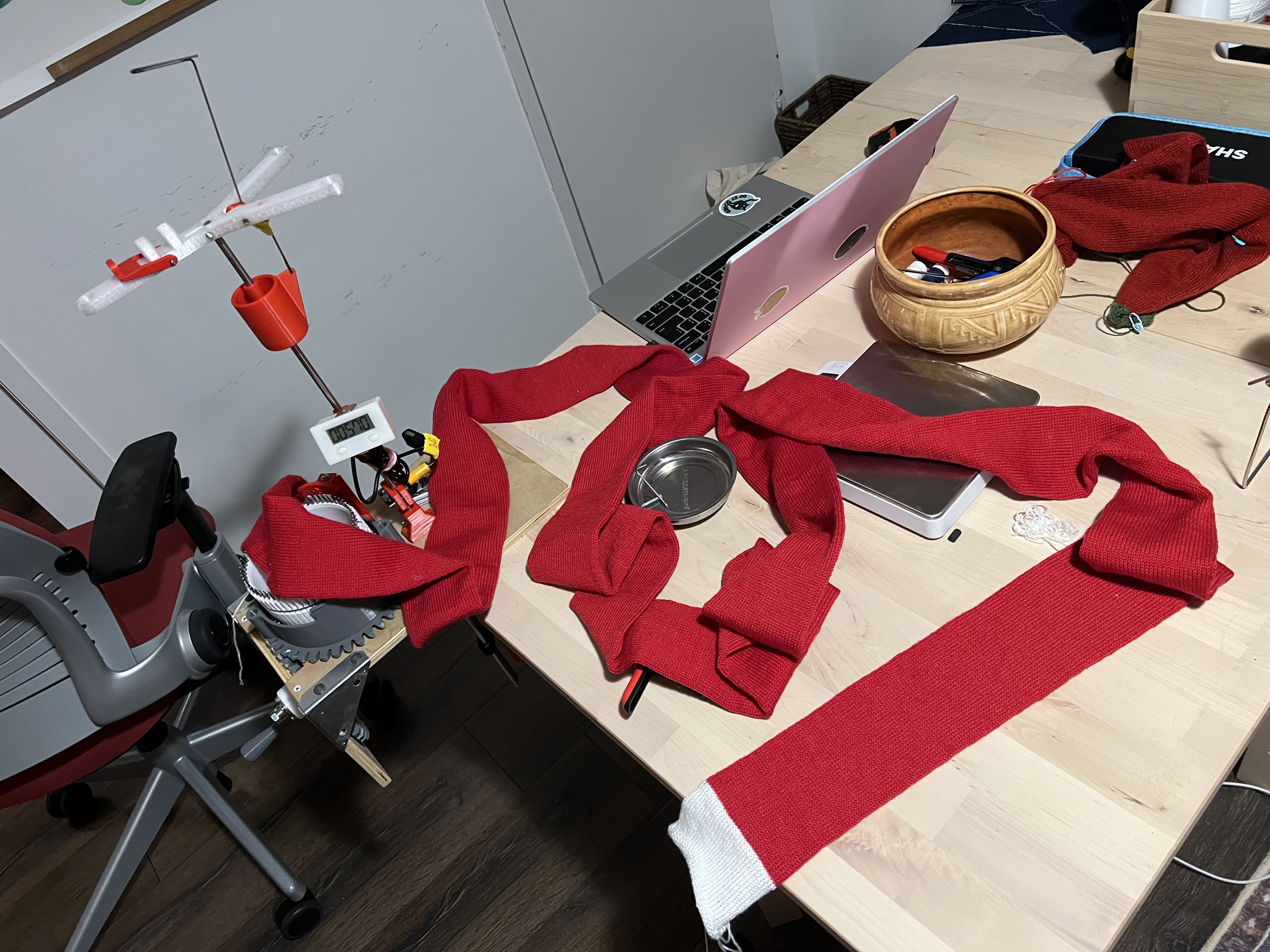
Maybe one day I’ll get the time to do a full CSM post…